No dermatoscope. No controlled lighting. No clinical setting. Oyster's Skin Intelligence Engine captures multiple images from a standard smartphone camera and extracts 15 dermatological biomarkers using enhanced photon manipulation and proprietary computer vision trained on 2M+ clinical images.
Smartphone cameras were not designed to read skin. A single photo cannot distinguish melanin gradation from shadow, or sebum reflection from camera glare.
Oyster captures a rapid sequence of images under varying angles and micro-exposures. The pipeline manipulates photon data across this image sequence to isolate dermatological signals invisible to any single frame.
The result: a structured multi-layer skin profile from a $150 Android phone or the latest iPhone. No infrared. No additional hardware.
Each biomarker is extracted independently and scored on a normalised scale. The output is a structured dermatological profile, not a skin type label.















Processing time
Under 12 Seconds
Reproducibility
Same skin, same output. Every time.
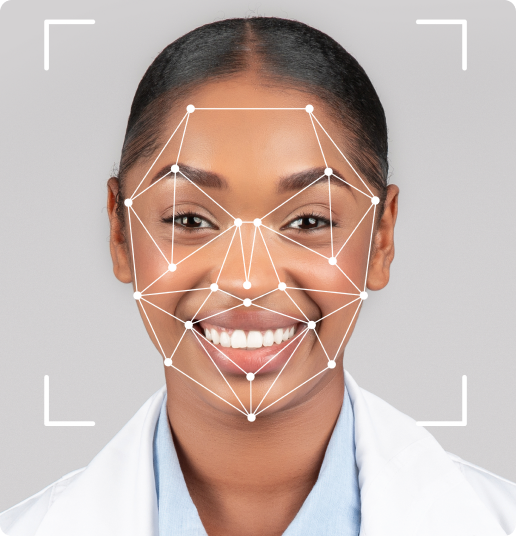
Most commercial skin AI is trained on publicly available dermatological image databases. Those databases are overwhelmingly Fitzpatrick I–III. Lighter skin. Cooler climates. Conditions that present differently on darker skin are underrepresented or absent entirely. Oyster's training dataset was built differently. 2M+ clinical images sourced from government healthcare programmes and dermatology clinics across Nigeria, South Africa, Kenya, Ghana, Rwanda, Morocco, and South Korea. Captured in the field. Under real lighting conditions. On real devices. By real clinicians. The dataset covers the full Fitzpatrick spectrum with deliberate overrepresentation of Types IV–VI. Hyperpigmentation on Fitzpatrick V skin does not present the same way it does on Fitzpatrick II skin. Erythema on melanin-rich skin is not visible as redness. Post-inflammatory marks on dark skin follow different recovery trajectories. General-purpose models miss these distinctions. Oyster's model was trained specifically to detect them. This dataset is Proprietary. Built over years of clinical partnerships. It grows with every scan.
Clinical images
markets
Fitz IV–VI accuracy
Rapid image sequence aligned and normalised. Noise reduction calibrated to device-specific sensor characteristics. Colour space normalisation across 1,400+ smartphone models. Photon data extracted and compared across frames. The same skin under different cameras produces the same biomarker output.
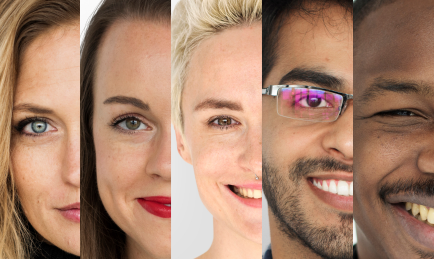
Fifteen parallel extraction heads. Each biomarker measured independently from the processed image sequence. No single-label classification. The model does not say “oily skin.” It says “oiliness index: 7.2/10, concentrated in T-zone, moderate in perioral region.”
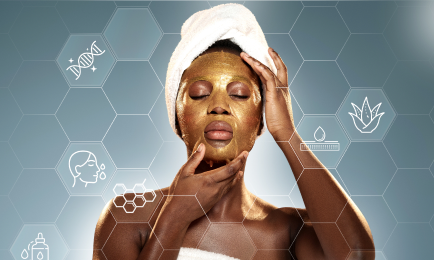
Biomarkers assembled into a structured profile. Product recommendations generated against the partner's catalogue with match confidence scored per SKU. Every recommendation screened through the contraindication engine before it reaches the customer.

Total pipeline latency
Under 12 Seconds
Guaranteed sub
2.5 seconds at Growth and Enterprise tiers
 Compute:
 Foundation models
The recommendation engine does not just match products to skin profiles. It screens every match against a rules engine built from dermatologist-validated ingredient interaction data.
The engine evaluates:
Products that pass: recommended with confidence score. Products that fail: excluded. Automatically. Products that partially match: flagged with clinical rationale visible to the partner's staff.
CeraVe Moisturizing Cream
Match: 94.7% · No contraindications detected
Retinol 0.5% Night Serum
Barrier compromised detected · Retinol flagged
AHA 10% Exfoliant
Active PIH detected · Clinical rationale visible to staff
Full programmatic access. Versioned. Documented. Scan submission, biomarker retrieval, recommendation generation, and restock event subscription through a single authenticated endpoint.
In-region deployment available. AWS af-south-1 (Cape Town) for South African data residency requirements. POPIA. NDPR. GDPR compliant. Biometric consent hashed. Consent modals served by geo-IP detection.
Event-driven. Scan completion. Recommendation generation. Restock trigger. Profile update.
Native mobile applications. iOS and Android. Camera access, image capture sequence, and scan submission handled client-side.
Partner data architecturally isolated. No cross-tenant data access. No shared inference state. Each partner's catalogue, scan history, and analytics exist in a dedicated logical partition.
One embed tag. Any web platform. Under 2 hours. Configurable UI. Partner branding. Mobile-responsive.



 Custom builds
 Any web stack
 React Native
The preprocessing pipeline normalises sensor data across device manufacturers, camera modules, and OS versions. A scan taken on a $150 Android device in Lagos produces the same biomarker accuracy as a scan taken on the latest iPhone in Seoul. No minimum device requirement beyond a rear-facing camera. No app download. Browser-based scan via WebRTC.

Contact us if you have any other questions.
The scan captures a rapid sequence of images. The imaging pipeline uses enhanced photon manipulation across these frames to separate melanin absorption from haemoglobin contribution, isolate specular reflection patterns, and map texture and colour variation across facial zones. The result is a structured 15-biomarker skin profile.
Single photos cannot disambiguate melanin gradation from shadow, or sebum reflection from camera glare. A multi-image sequence under varying micro-exposures lets the pipeline isolate dermatological signals invisible to any single frame — the same biomarker accuracy as a $150 Android device in Lagos as the latest iPhone in Seoul.
Most computer vision models were trained on Fitzpatrick I–III data. Conditions present differently on darker skin: hyperpigmentation, erythema, and post-inflammatory marks all behave differently across the Fitzpatrick spectrum. We trained on the largest melanin-rich dataset in commercial AI — 98.9% measured accuracy on Fitzpatrick IV–VI.
Biometric consent hashed on submission. Data residency configurable per region (AWS af-south-1 Cape Town available for South African residency). POPIA, NDPR, GDPR compliant. Partner data architecturally isolated — no cross-tenant data access.
NVIDIA-accelerated inference for primary models. Gemini-powered reasoning for contraindication checks. Optimised for mobile-origin image quality. Total pipeline latency under 12 seconds — guaranteed sub-2.5 seconds at Growth and Enterprise tiers.
The preprocessing pipeline normalises sensor data across device manufacturers, camera modules, and OS versions. A scan taken on a $150 Android device in Lagos produces the same biomarker accuracy as a scan taken on the latest iPhone in Seoul. No minimum device requirement beyond a rear-facing camera. No app download. Browser-based scan via WebRTC.
Every recommendation is screened against clinical ingredient interaction data: active ingredient concentration vs biomarker thresholds, ingredient combination conflicts (e.g. AHA + retinol), condition-specific contraindications (e.g. retinol on compromised barrier), and sensitivity-adjusted fragrance and irritant screening. Products that pass: recommended with confidence score. Products that fail: excluded automatically. Products that partially match: flagged with clinical rationale visible to the partner’s staff.
 Skin Analysis & Product Recommendations
 Clinic OS
 Analytics & Intelligence
 Voice Agents
 Pharmacies & Dispensaries
 Beauty Retailers
 Brands & Manufacturers
 API Documentation
 Widget Documentation
 SDK Documentation
 Evaluation Portal